An intelligible intelligence
a tragedy like clockwork

As all too commonly considered, «intelligence» is imagined by the incompetence of the people most impatient to democratize it or otherwise drag it downtailwards into the flattering comparative idiocy of ordinary conditions. The true conception of «Intelligence» is the quality of relation between abstract mind and reality, perception of object. Substantiated, intelligence can be attained and sometimes predicated by the ability to recognize an object through its governing constraints and possibly transform that into effective method and improved structure. «Intelligence» per se is no reverent term for loosely perceived superiority over a mediocre baseline, which in reality says next to nothing about whether the mind has any actual relation to it.
On a neighboring note, the public abuse of the term «genius» pretty much belongs to the same relatively popular inflationary reflexes and general rationalizations, and can be dismissed just as easily. Fundamentally, «genius» is mostly associated and assorted social recognition handed from ignorance below by people who unfortunately mistake the impressive violation of their own immediate limitations necessarily as proof of an exceptional mind.
Many educated people can sense their own threshold before extant complexity inside the respectable demarcation of their respective profession, but the same people will often fundamentally mistake adjacent familiarity for stringent conceptual command when assessing objects projected through popular notoriety. That is the poverty of the observers subconscious «common sense», where the contingent mind accede «intelligence» after institutional incantations and/or commercial in-consequence, that is, with provision and discernment effectively excised from the product. The predominant thought process of the average, public perspective presumes profound penetration by proximity, and that is inferring socially visible consequences as proof of concept for foreign phenomenae it never was close to competently contradistinguish.
Some practical elimination would be useful before proceeding to the more actual abstract markers. The archetypally actually intelligent individual, allowing for some individual temperament and historical aspects as we otherwise utangle, does not habitually associate himself with much intellectually imitated prestige, if any. Neither does the real intelligent individual care about social confirmation, and is certainly not radically driven by it, nor hardly hung up on moral fashions and banal public overtures.
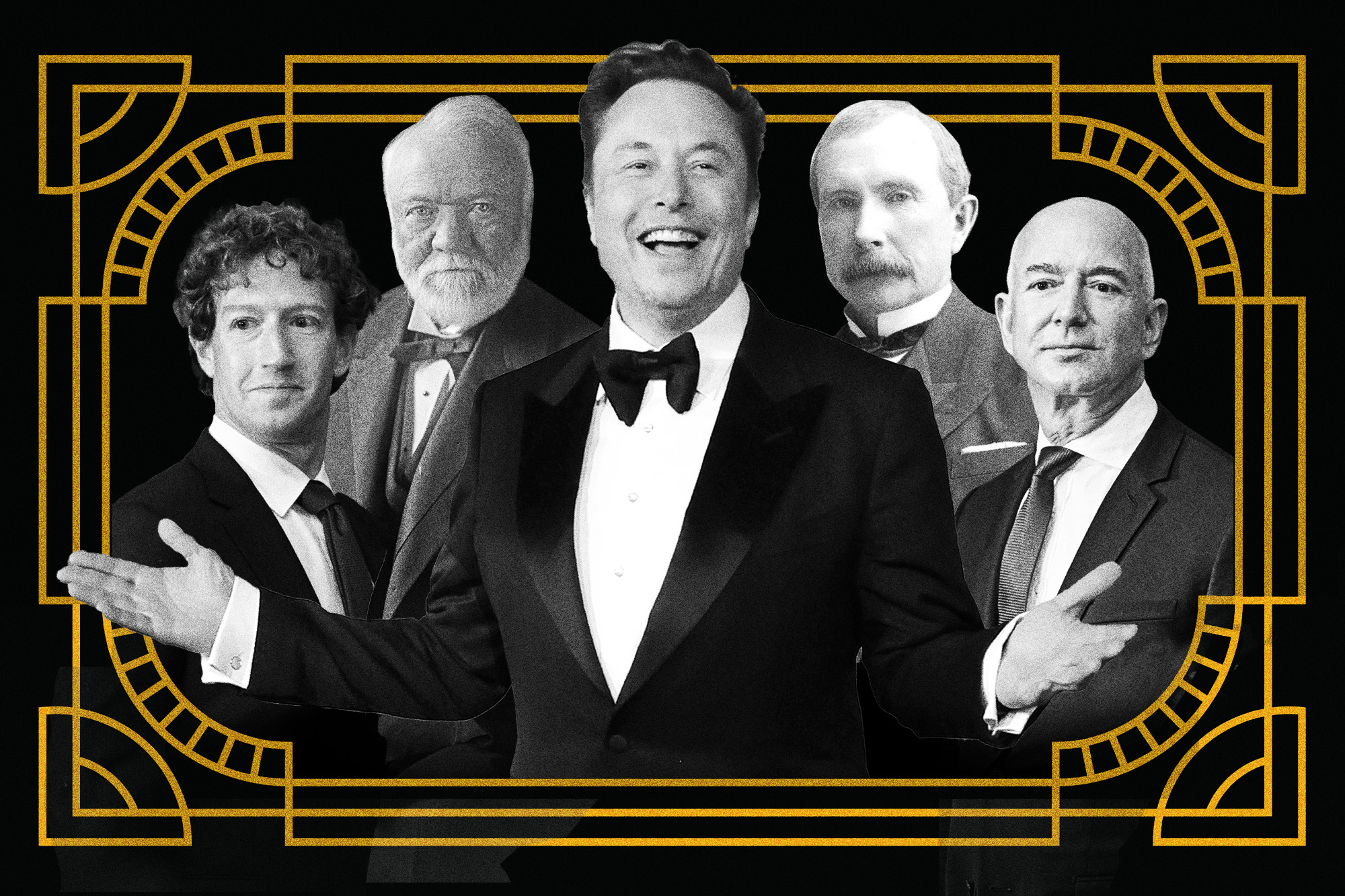
In a philosophical sense, the intelligent individual does not opt for acquisition and wealth contrasted with creation, as it is against reason, which is precisely why the confusion is so common among conglomerates and within the culture of the corporate executive treasonous strata, where buy out’s and fraud is virtually socially normalized and confidently put forth as actual authorship. So an intelligent person should hardly even be associated with the typical cumulative, power hungry figures whose apparent mastery mostly subsist in corralling capital investments and claiming intellectual ownership over objects made intelligible by others. Nevertheless, this does not mean that intelligence necessarily excludes commerce and some more worldly execution on its behalf. In some minority cases it is quite the contrary. An interesting character in view of that would be someone like Ingar Kamprad, the founder of Ikea, and his basic commercial intelligence which appears as practical simplification but in a coherent operational technepoiesic true form, and not as a merely megalomaniacal expansion for its own sake and for profit. But yes, the intelligent individual may end up building a commercial system, yet the cognitive performance always remains centred on the object itself while a lower archetype manages symbolic trophies around his person in order to publicly and socially associate these objects as accolades of intellectual fortitude. Henry Ford obviously comes to mind regarding the former, while business billionaires and corporate hijackers like Bill Gates and Elon Musk can be neatly placed in the latter category without much incident.
For strangers to the object(s) in question, a negative diagnostic is often more useful than the positive because the affirmative relation is the very thing the commoner really cannot consistently evaluate, and so most attempts at laudable interpretations and interrelations thereof is probably utterly nugatory. It’s much more revealing to observe from the outside what the intelligent person habitually shun and passively disdain socially and professionally rather than hopelessly trying assessing the internal perspective he may have no incentive to showcase in the first place to someone with no idea. However, there are considerable caveats before doing so.
First, do not typically pool the intelligent care and unorthodox behaviour together with the pliable theatrical humility of the ‘pseudo-modest’ personality type. This is for the most part someone who might fall in and out of the social framework by way of appearing uninvolved and «agreeable», and almost assuredly this is an everyday person with special concerns rather than the contrary, especially so if the behaviour is paired with being conveniently unthreatening and alike. Such generally inconvenienced people will surely bring these features about while insisting to be «misunderstood» «intelligent» individuals. Anyway, they are destined to fall by the wayside before any meaningful intelligence can to be ascribed to them sooner rather than later as they evidently so seek recognition through affective manipulation rather than exemplification. Their house variety «humility» is usually a weak and civil facade that of a lacking person who’s hungry for approval so that people care to validate their «gifted» garbage.
By a stronger categorization, the stereotype of the concocted intelligent spans the social register of morally delinquent crooks and emotional desperadoes who have grown frustrated by their insufficient humane access and lacking the confidence of isolation. As a rather unflattering and additioal symptom, they will constantly launder their passivated «outsider» status as some careful claim of some kind of invisible superiority, but more obviously without any actual merit nor palpable potential. The most actualizing about their action is the tell all bickering about public exclusion and lots of loud inner voices. The tale of the tape here is that the intelligent individually tunes out and thus becomes more transcendent through separation, while the mediocrity inflictive, pseudo-modest, self-philosophizing «outsider» degenerates in spectacular fashion with resentment of belonging to neither flock.
Speaking of conflations and mistaken expectations, although intelligent people are seemingly nowhere to be identified and approved by the insiders of so-called society as more normative examples that fit their rigid frame and A.I take-away tupperware slop so they can make sense of things they cannot even discern to begin with, which also is partly why the public in their own relative nescience collectively conjures construed examples as a social crutch and convenienced hierarchy…. the intelligent remain at the very verge of popular credibility and visibility, especially so in more institutional, conformist societies.
Related: AI,ASI,AIXI suum cuique —Deduction of the intellectual induction ideal

This also somewhat explains why intelligent people often optimize for stability rather than social motility, and how come what is commonly interpreted as «introversion» instead is due to a different attention-economy and very low personal tolerance for pointless time consuming collective circulation. This is further elucidated by what ought to be taken as another fact: that actual intelligent person does particularly not seek celebrity as a condition of character, and never pursues wealth (creation) over mastery. It certainly does not depend on public praise in order to actualize commitment to more ambitious things than imaginable by crowd chrematistics. Intelligence is perfectly capable of remaining totally independent of popular demand, and perhaps preferably excited by the sheer opposite. This modest collection of radical character traits constitutes what is already an exceptional condition in a social order where most people need recognition before they can even believe in their own capacity, also ironically termed «imposter syndrome» amongst the melodramatic pretend thinkers. The intelligent is obviously portrayed and pigeonholed by many as simply pretentious because he has no such ‘healthy’ and ‘humane’ ‘concerns’ about objective realities, and predominantly because he does not operate out of his own disbelief or prey on the ignorance of others.
Regarding mastery, one of the more difficult intelligence traits to capture cleanly is the cogent breadth and significant morphology of it. In my own experience, but confirmed by vox pop psychometrics, an intelligent individual will often and typically learn much faster and much more across fields as well as detect more structural similarities than the average person ever could in a lifetime of diligent conformist study. Although again, this could also be misperceived as an straightforward road to personal success, however it is missing a very obvious problem which most people seem too oblivious to understand: that the very same breadth of aptness can, and usually do become socially inconvenient for a person who recognize relations across fields and concepts, and in such a way may become less willing to settle inside a standardized station and less patient with the formal confines of an orthodox operation. Intelligent people are more susceptible to popular failure per the rigid, often convoluted categories by which society employs and ultimately ‘recognize’ their relative corresponding linearity. This is also where the term «polymath» becomes prognostic rather than prosaic, provided there is no further democratic debasement into another stock label for scatterbrained meddlesomeness lacking veritable profundity, usually also otherwise therapeutically designated as e.g «ADHD».
Related: Political logic, plebeian linearity

Community wise, and as usual, there are a lot of dumb popular myths and full blow misunderstandings about intelligent individuals, group formation and bonds. I won’t go into this very extensive myriad here, even though there is so much to note and so many stories to illustrate. But what I will say is that the intelligent individual is more socially inelastic than categorically socially inept, and this particular propensity is mostly due to the constant pre-occupation and objective questioning inside someone who is already a chronically impatient and very likely has considerable personal contempt with tableau and ceremonialness. If not there, this will surely emerge given little time, especially so with regards to the small theatrical obligations by which ordinary people find themselves quite agreeable to in the midst of the many standardized social games, which the intelligent simply does not commit much, if anything to.
But this type of behaviour and self-suspension from the ‘silly social games’ comes at a cost, and often much more than necessary due to the considerable differences in proportion and priority, especially where intelligence is adjoined to poverty or poor institutional fits, obsessions and weak appetite for self-representation; carelessness and in-curiosity. On the other hand, the intelligent individual who somewhat succeeds inside the societal playpen often ends up paying dearly through other designations, such as mass distortion or personal exhaustion, and at best ultimately through reputational conflict and the later detrimental shift of the conditions that made his success possible. The less diametric alternative is obscurity, where the mind remains real enough by itself and fails to become too visible as a social form.
The various examples of intelligence and their personal predestinations range veritably from the likes of Nicola Tesla to van Gogh, as the main conceptual span here covers two extreme manifestations of the archetype: electrical and mechanical possibility and perceptual pressure and aesthetic vision. Perhaps less recognized than other, more popular figures, reckon John Harrison and Henry Maudslay’s signified, excellent practical intelligence at its most unforgiving toil and obscurity, while aforementioned acclaimed contemporaries like Kamprad represent the industrial and commercial exception. But the real conceptual ‘connective tissue’ in relation to intelligence per se here is overall object supremacy, and once the object of higher abstraction becomes, or always was a counterfeit instrument of the popular personality, the claim to higher intelligence, like clockwork, begins to rapidly deteriorate and usually certain «personal» disasters for the individual in question looms large.
The ever so prevailing marker is object consistency and conception, to which the intelligent individual is drawn with type of rigor that may appear excessive and even extreme to people whose mental life is governed by social circulation and emotional concerns. This is a recipe for problem making, as the intelligent is likely to detect where a ‘fashionable’ formulation perhaps has postponed itself into a eventual problem, for example something that has bred stagnation and physical dysfunction, or where many a popular abstractions has preserved the many false questions of the collective consensus which is always moving. This can also be witnessed by others as a fundamentally ‘hostile’ and ‘dangerous’ attitude, which sufficiently ironically actualize their own ignorant prejudice into reality.

As for the distorted «intelligent» type, such should consequently be easy to detect once other observations have been made and then the right elementary questions asked as a form of questionnaire and flow chart: Does it produce a productive form, or does it inhabit the spectacle of form as a performance scam? If it disciplines a field, how so for what, or does it merely dominate the incentives offered without any reasonable utility besides? Most revealing, does the intelligent understand the thing it is operating, or has it just manifested the social environment by manipulating the public perception of the object in question? Many schemers and scammers fall to these question once examined, but I will either not embark on such a demythifying debunkment here.
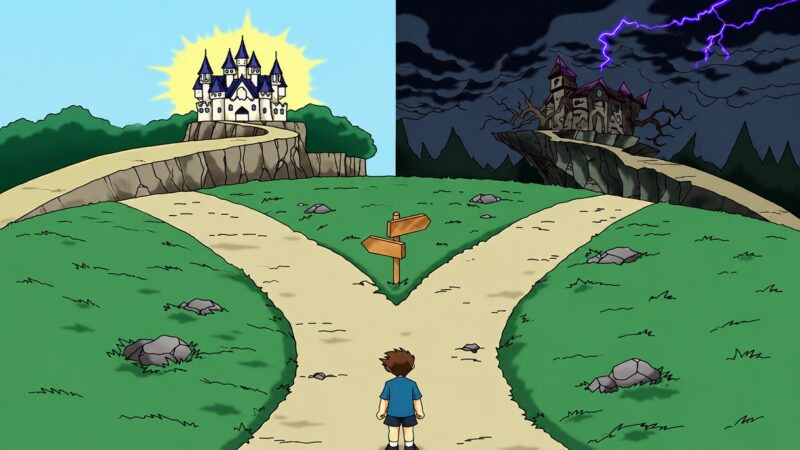
That said, it is easy to see that intelligence is not what the current society is meant to appreciate, even though it seemingly promotes a lot of generally wonderful, wishful stories. There are many reasons for why this is so, and near none of the formalized reasons are particularly intelligent. This as a fact is also structurally secured by «democracy» and its many flawed governmental format as a social and political corrupt philosophy, exceedingly plagued by numerous fallacies courtesy of the majority. Society does to some extent and low degree recognize ingenuity by way of immediate utility and comfortability, but only barely and takes such for granted because of basic ignorance. Society as socially encompassing concept is all about ignorantly increasing complexity and substitute its different dysfunctional fall out with mass-compliance to reanimate something that barely mimics a natural hierarchy and objective order. Such «modern», accomplished societies’ fundamental conflict runs deeper than master/servant or idiot ideological dialectics, since these are already very conceptually inflated and overburdened social structures inside a narrowly controlled and often failing frame of inconsistent ideas, while critical intelligence is the compounded ability to question the objectively derelict frame itself and place its deficient utility under judgment. This is why the intelligent individual will perpetually appear villainous to the people who uphold the frame in their democratic complacency, that is until the people of the past are re-domesticated into a more useful servility.

Will Ares Sabbatsson Paris di Duce
DEng praxis, ex Candidatus D.C juris 1/x 672,500,000 ♈︎itan